A dor menstrual nem sempre afeta apenas a parte inferior do abdômen. Durante a menstruação, algumas mulheres também podem sentir dor nas pernas, sensação de peso, cansaço ou desconforto, especialmente durante os primeiros dias do período menstrual.
Essas sensações podem fazer parte dos diferentes sintomas menstruais que aparecem antes ou durante a menstruação. Entender por que elas acontecem pode ajudar você a encontrar formas de aliviar o desconforto e reconhecer quando pode ser uma boa ideia consultar um profissional de saúde.
Por que as pernas doem durante a menstruação?
Uma das principais causas está relacionada às prostaglandinas, substâncias produzidas naturalmente pelo organismo durante a menstruação. Elas ajudam o útero a se contrair para eliminar o seu revestimento, mas também podem contribuir para o aparecimento de dor em outras áreas do corpo.
Quando essas contrações são mais intensas, o desconforto pode se espalhar da parte inferior do abdômen e da região pélvica para a região lombar, coxas e pernas.
Outros fatores também podem contribuir para o desconforto nas pernas durante a menstruação:
Retenção de líquidos, que pode causar inchaço e sensação de peso.
Alterações hormonais, especialmente as variações nos níveis de estrogênio e progesterona. Se quiser saber mais sobre como os hormônios podem afetar o seu ciclo, leia nosso artigo sobre o que é um desequilíbrio hormonal.
Dor referida, já que os nervos da região pélvica estão conectados a outras áreas próximas do corpo.
Cansaço e redução da atividade física, que podem aumentar a rigidez ou a sensação de peso nas pernas.
Por isso, suas pernas podem parecer mais cansadas, sensíveis ou pesadas pouco antes do início da menstruação ou durante os primeiros dias do período menstrual. O cansaço também pode ser um sintoma comum durante a menstruação.
É normal sentir dor nas pernas durante a menstruação?
Em muitos casos, sim. A dor nas pernas pode estar associada à dismenorreia, termo médico utilizado para descrever a dor relacionada à menstruação.
A intensidade pode variar bastante de uma pessoa para outra. Algumas mulheres podem sentir apenas uma leve sensação de peso, enquanto outras podem apresentar cólicas ou dores que começam na região lombar ou pélvica e se estendem até as coxas.
No entanto, o fato de a dor poder estar associada à menstruação não significa que uma dor muito intensa ou incapacitante deva ser considerada normal.
Como aliviar a dor nas pernas durante a menstruação
Alguns hábitos simples podem ajudar a reduzir o desconforto.
1. Aplique calor
O calor pode ajudar a relaxar os músculos. Experimente usar uma bolsa de água quente ou uma almofada térmica na parte inferior do abdômen ou na região lombar.
2. Continue se movimentando
Fazer exercícios talvez não seja a primeira coisa que você tenha vontade de fazer quando está sentindo desconforto, mas movimentos leves podem ser benéficos. Caminhar, fazer alongamentos ou praticar yoga pode ajudar a reduzir a tensão muscular e favorecer a circulação.
Não é necessário fazer um treino intenso. Até mesmo alguns minutos de movimento leve podem fazer a diferença.
3. Massageie as pernas
Uma massagem suave, especialmente nas coxas e panturrilhas, pode ajudar a relaxar os músculos e reduzir a sensação de peso.
4. Mantenha-se hidratada
Beber água suficiente pode ajudar a aliviar a sensação de inchaço ou peso associada à retenção de líquidos. Manter uma alimentação variada e equilibrada ao longo do ciclo menstrual também é importante.
5. Descanse e priorize o conforto
Seu corpo pode precisar de um pouco mais de descanso durante a menstruação. Dormir o suficiente e equilibrar as atividades com momentos de relaxamento pode tornar o desconforto menstrual mais fácil de controlar.
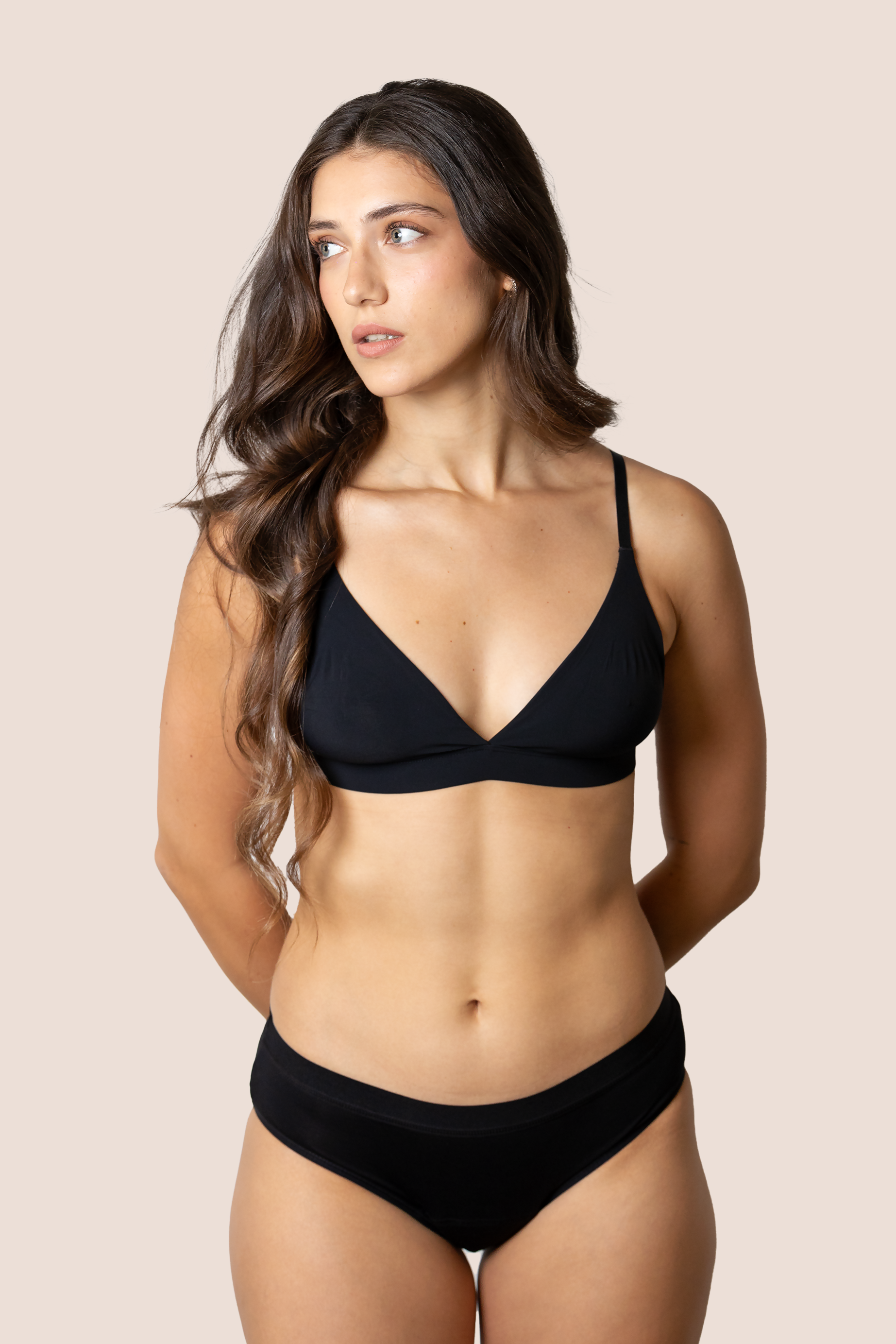
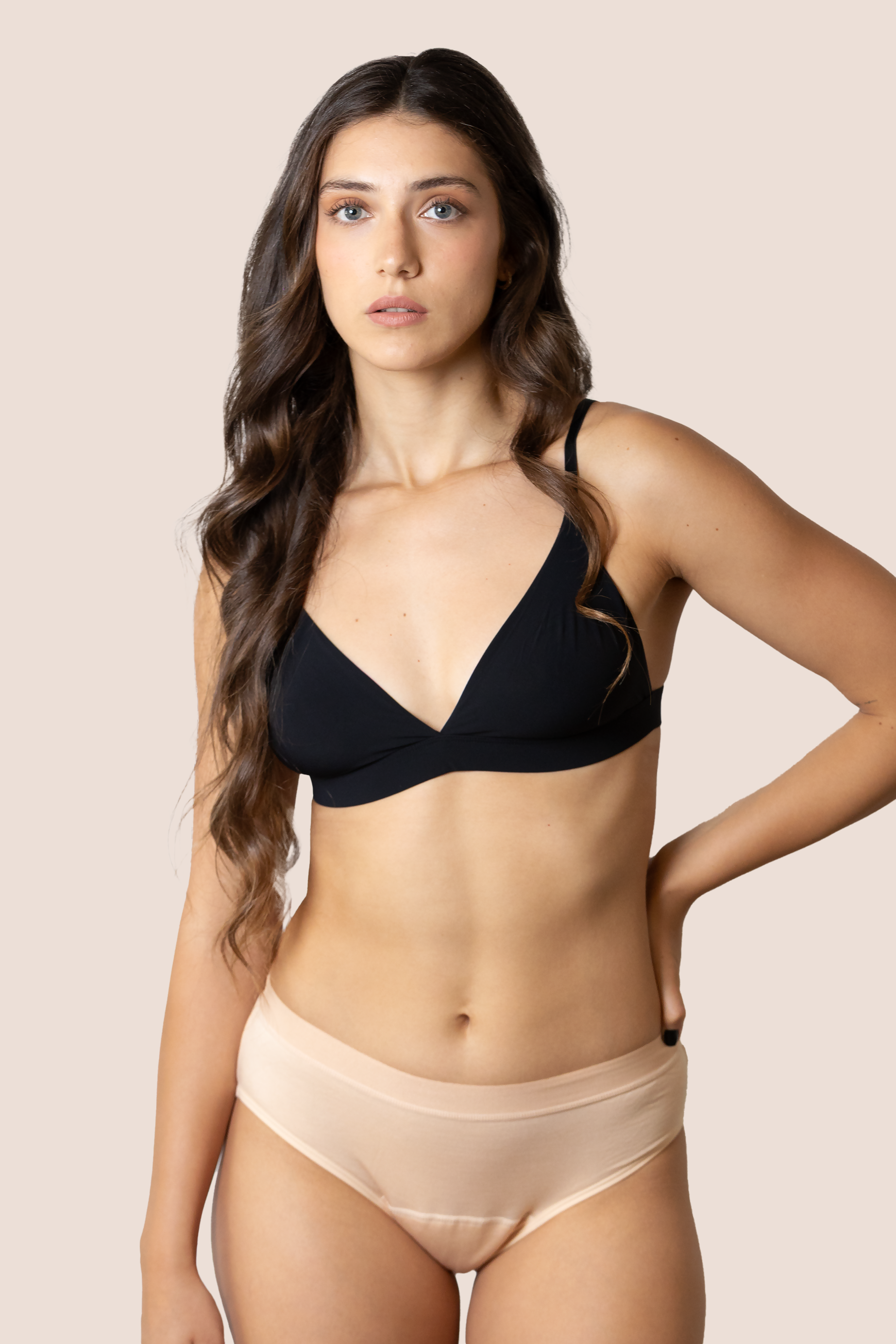
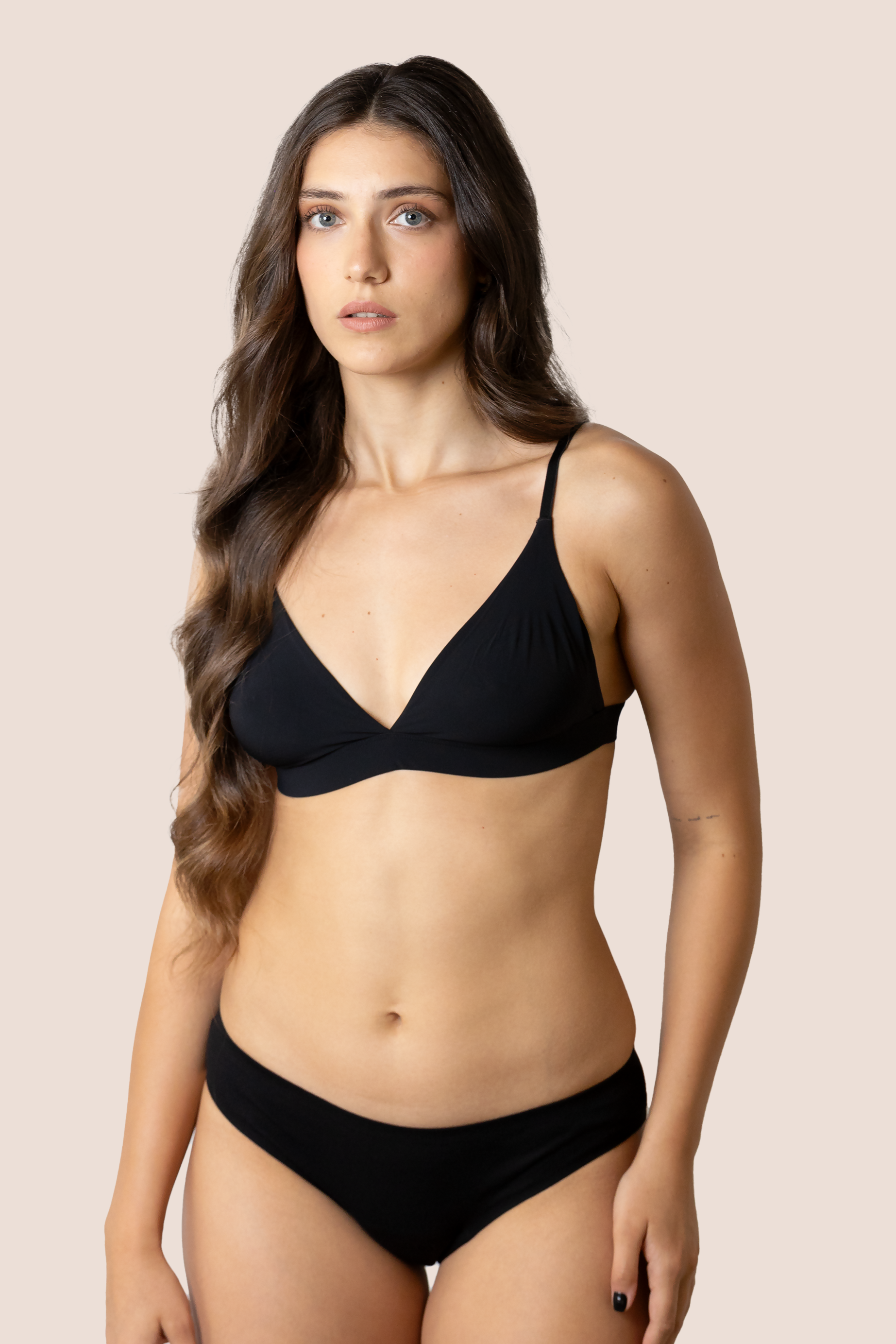
Você também pode optar por cuecas menstruais durante esses dias como uma forma confortável de controlar o fluxo menstrual enquanto continua realizando suas atividades diárias.
Dor nas pernas antes da menstruação
O desconforto nas pernas não começa necessariamente quando o sangramento menstrual aparece. Algumas mulheres sentem dor ou sensação de peso nas pernas vários dias antes da menstruação.
Isso pode estar associado à síndrome pré-menstrual (TPM), que também pode causar inchaço, alterações de humor, sensibilidade nos seios, cansaço, dores de cabeça e desconforto digestivo.
O ciclo menstrual também pode ser afetado por fatores externos. Por exemplo, o estresse pode causar um atraso na menstruação e influenciar temporariamente alguns dos sintomas que você sente ao longo do ciclo.
Os sintomas pré-menstruais geralmente melhoram quando a menstruação começa ou durante os primeiros dias do período menstrual.
Quando consultar um profissional de saúde?
É recomendável consultar um médico ou outro profissional de saúde se a dor for muito intensa, surgir repentinamente, piorar progressivamente ou impedir você de realizar suas atividades diárias habituais.
Também é importante procurar orientação médica se a dor afetar principalmente uma única perna e vier acompanhada de inchaço significativo, vermelhidão ou sensação de calor, ou se os sintomas menstruais forem particularmente intensos.
Em alguns casos, dores menstruais intensas podem estar associadas a condições como a endometriose. Por isso, dores fortes ou persistentes não devem ser automaticamente consideradas uma parte normal da menstruação.
Escute os sinais do seu corpo
Cada menstruação pode ser diferente. Uma leve dor ou sensação de peso nas pernas durante a menstruação pode ser comum e estar relacionada às alterações hormonais e às contrações uterinas.
Calor, movimentos leves, massagens, uma boa hidratação e descanso podem ajudar você a se sentir mais confortável durante esses dias.
Além de conhecer melhor o seu ciclo menstrual, escolher produtos adequados às suas necessidades pode ajudar a tornar a menstruação mais confortável. As cuecas menstruais podem ser uma opção prática e confortável para se adaptar ao seu fluxo e à sua rotina diária.
E lembre-se: se a dor for intensa, persistente ou diferente do que você costuma sentir, é recomendável consultar um profissional de saúde para identificar a causa.